The Best Guitar Lessons for Understanding Historical Music Styles 🎸
Are you a guitar enthusiast with a passion for historical music styles? Whether you’re a beginner or an experienced player, understanding the rich tapestry of musical history can enhance your playing and appreciation for the guitar. In this guide, we’ll explore the best guitar lessons tailored to help you dive deep into historical music styles, from the Renaissance to the Rock ‘n’ Roll era. Let’s embark on this melodic journey! 🎶
Table of Contents
1. Introduction
2. The Renaissance Era: Discovering the Lute
3. Baroque Influences: Mastering Bach on Guitar
4. Classical Period: Embracing the Works of Sor and Giuliani
5. Romantic Era: The Expressive Techniques of Tarrega
6. The Birth of Blues: Understanding Its Impact on Guitar
7. Jazz Age Innovations: Learning from Django Reinhardt
8. Rock ‘n’ Roll Revolution: Channeling the Spirit of Chuck Berry
9. Conclusion
10. FAQs
The Renaissance Era: Discovering the Lute 🎵
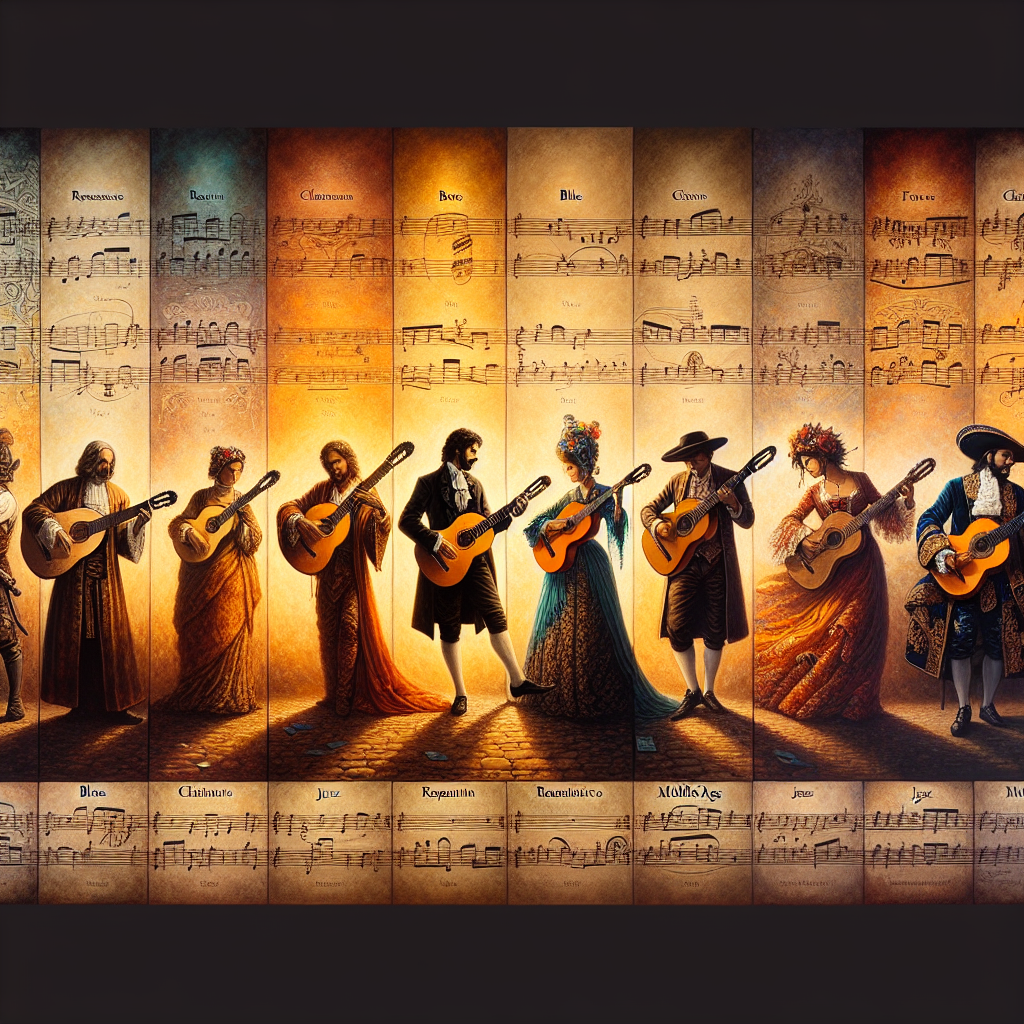
The Renaissance period (1400-1600) was a time of cultural rebirth, and music was no exception. The lute, a precursor to the modern guitar, was the instrument of choice. If you’re eager to explore this era, look for guitar lessons that focus on lute repertoire transcribed for the guitar. These lessons often include pieces by composers like John Dowland and Luis de Milan.
When studying Renaissance music, pay attention to the intricate counterpoint and polyphony that defined the period. Practicing these pieces can significantly enhance your fingerstyle technique and your understanding of harmony.
Baroque Influences: Mastering Bach on Guitar 🎼
The Baroque era (1600-1750) is characterized by its expressive melodies and complex harmonies. Johann Sebastian Bach’s compositions are a cornerstone of this period. Guitar lessons that focus on Bach’s works, such as his “Cello Suites” or “Lute Suites,” provide a challenging yet rewarding experience.
These lessons will help you develop your ability to interpret intricate musical textures and improve your technical proficiency. Embrace the challenge, and you’ll find your musicality enriched and expanded.
Classical Period: Embracing the Works of Sor and Giuliani 🎻
The Classical period (1750-1820) brought clarity and balance to music. Guitarists like Fernando Sor and Mauro Giuliani were instrumental in advancing guitar music during this time. Seek out guitar lessons that include their compositions to fully appreciate this era’s stylistic nuances.
Focus on developing a clean tone and precise articulation when playing classical pieces. These skills are crucial for conveying the elegance and grace typical of this period’s music.
Romantic Era: The Expressive Techniques of Tarrega 🎶
The Romantic era (1820-1900) was all about emotion and expression. Francisco Tarrega, known as the “father of classical guitar,” composed pieces that embody the Romantic spirit. Lessons centered on Tarrega’s works will guide you in mastering expressive techniques such as vibrato and dynamic contrasts.
Dive into pieces like “Recuerdos de la Alhambra” or “Capricho Árabe” to experience the depth of emotion that defines this musical style.
The Birth of Blues: Understanding Its Impact on Guitar 🎤
The early 20th century saw the rise of the Blues, a genre that has profoundly influenced guitar playing. Lessons focusing on Blues history and techniques will introduce you to the works of legendary artists like Robert Johnson and B.B. King.
These lessons often cover the 12-bar blues structure, pentatonic scales, and the expressive bending techniques that give the Blues its unique sound. Understanding the Blues is essential for any guitarist looking to explore modern music styles.
Jazz Age Innovations: Learning from Django Reinhardt 🎷
The Jazz Age was a time of innovation and improvisation. Django Reinhardt, a pioneering jazz guitarist, created a distinct style that continues to inspire musicians today. Lessons focusing on Reinhardt’s techniques will teach you about swing rhythms, chord progressions, and improvisational skills.
Exploring Jazz guitar lessons can open up a world of creative possibilities and help you develop a unique voice on the instrument.
Rock ‘n’ Roll Revolution: Channeling the Spirit of Chuck Berry 🎸
The Rock ‘n’ Roll era of the 1950s and 60s brought a new energy to music. Chuck Berry, often called the “father of rock guitar,” set the stage for future generations with his innovative use of electric guitar and showmanship.
Guitar lessons focusing on rock history will cover Berry’s signature licks, rhythm patterns, and the essential role of the electric guitar in shaping the genre. Embrace the spirit of Rock ‘n’ Roll and let it fuel your passion for the guitar!
Conclusion
Exploring historical music styles through guitar lessons not only enriches your knowledge but also enhances your playing skills. From the expressive melodies of the Renaissance to the electrifying riffs of Rock ‘n’ Roll, each era offers unique techniques and insights.
By delving into these historical styles, you can develop a well-rounded understanding of music and bring a deeper sense of artistry to your guitar playing. So, pick up your guitar, choose an era, and let the music of the past inspire your journey! 🎸
FAQs
What is the best way to start learning historical music styles on guitar?
Begin by selecting a specific era that interests you, and find guitar lessons that focus on composers and styles from that period. Practice regularly and listen to recordings to get a feel for the music’s nuances.
Can I learn historical music styles on an electric guitar?
Absolutely! While some styles may traditionally use acoustic guitars or lutes, electric guitars can be adapted for any genre. The key is to focus on the techniques and musical elements rather than the instrument itself.
Are there online resources for learning historical guitar music?
Yes, there are numerous online platforms offering lessons on historical music styles. Websites like YouTube, Udemy, and MasterClass provide tutorials from experienced guitarists who specialize in various historical genres.
How can understanding historical music styles improve my guitar playing?
Studying historical music styles can enhance your technical skills, broaden your musical vocabulary, and deepen your understanding of music theory and expression. This knowledge can make you a more versatile and creative guitarist.